
How to Brew Café-Quality Coffee at Home: The 5 Fundamentals That Actually Matter
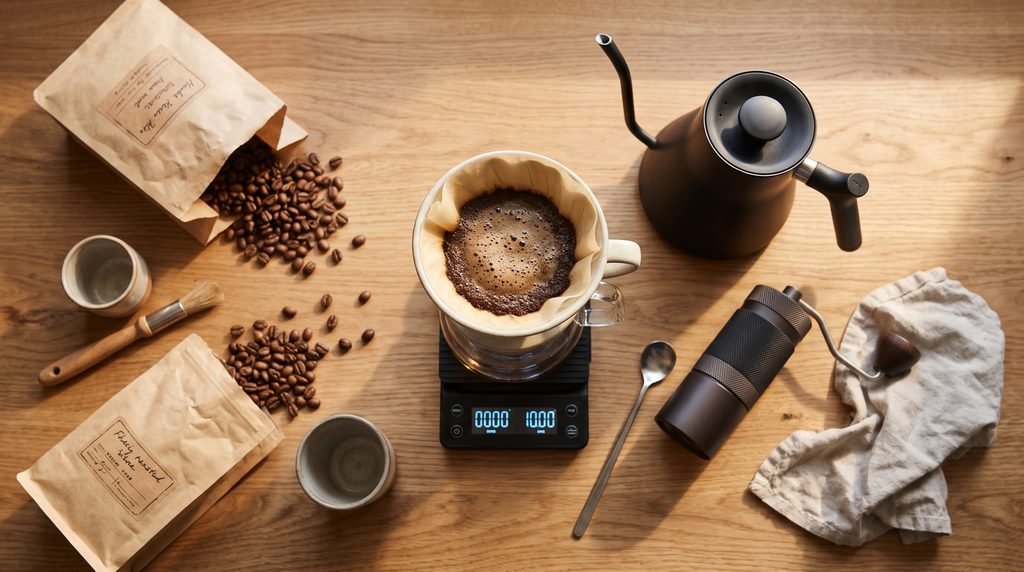
You do not need a $2,000 espresso machine or a barista certification to make extraordinary coffee in your kitchen. Most disappointing home-brewed coffee fails for simple, fixable reasons: stale beans, uneven grounds, tap water off-flavors, or guesswork measurements.
Specialty cafés produce sweet, balanced, complex cups because they control five core brewing variables. Once you dial in these fundamentals, even a basic drip brewer, French press, or pour-over cone will deliver consistent, café-level results every morning.
1. Start With Freshly Roasted Whole Beans
Coffee is an agricultural product, not a shelf-stable pantry staple. Once roasted, coffee beans release carbon dioxide and volatile aromatic compounds—the exact oils and gases responsible for sweetness, floral notes, and body.
- Check the “Roasted On” date: Skip bags that only list a “Best By” date, which is often set a year or two after roasting. Aim to buy beans within 7 to 30 days of their roast date.
- Buy whole bean, never pre-ground: Grinding increases the surface area of coffee exponentially, causing it to oxidize and go flat within hours rather than weeks.
- Store properly: Keep beans in an opaque, airtight container at room temperature away from sunlight and heat. Avoid storing everyday beans in the refrigerator or freezer, where condensation and food odors degrade flavor.
2. Upgrade to a Burr Grinder for Even Extraction
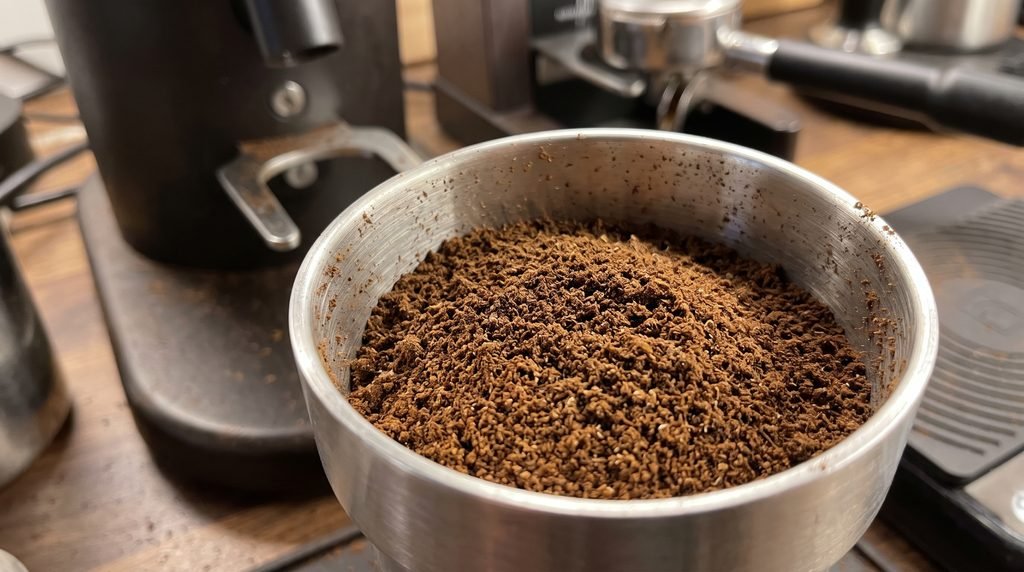
If you make only one gear upgrade to your home coffee setup, make it a burr grinder. Blade grinders chop beans unevenly, leaving large boulders alongside powdery dust. When hot water hits uneven grounds, the dust over-extracts (creating harsh bitterness) while the boulders under-extract (creating sourness) in the exact same cup.
Burr grinders crush beans between two calibrated abrasive surfaces, producing uniform particles tailored to your brew method:
| Brew Method | Ideal Grind Size | Visual Texture Reference |
|---|---|---|
| French Press / Cold Brew | Coarse | Sea salt or cracked peppercorns |
| Auto-Drip / Flat-Bottom Pour-Over | Medium | Regular table salt or beach sand |
| Cone Pour-Over (V60 / Chemex) | Medium-Fine | Slightly finer than table salt |
| AeroPress | Fine to Medium-Fine | Fine sand |
| Espresso / Moka Pot | Extra Fine | Powdered sugar or flour |
3. Master Your Coffee-to-Water Ratio With a Digital Scale
Measuring coffee by scoops is notoriously unreliable because dark roasts are physically larger and less dense than light roasts. A scoop of dark roast weighs significantly less than a scoop of light roast, throwing off your strength and extraction.
Using a simple digital kitchen scale accurate to 0.1 grams removes all guesswork. The specialty coffee industry standard starting point—known as the Golden Ratio—is 1:16 (1 gram of coffee for every 16 grams of water).
- Standard 12 oz (350g) Mug: Use 22g of coffee to 350g of water.
- Two-Cup Carafe (600g): Use 37.5g of coffee to 600g of water.
- Stronger, Richer Cup (1:15): Use 23g of coffee to 350g of water.
- Lighter, Tea-Like Cup (1:17): Use 20.5g of coffee to 350g of water.
4. Fix Your Water Quality
A brewed cup of black coffee is 98.5% water. If your tap water tastes heavily of chlorine, tastes flat, or leaves mineral scale inside your kettle, those exact flavors will carry straight into your mug.
- Filter your water: Run tap water through a standard activated-carbon pitcher filter (like Brita or PUR) to remove chlorine and off-odors while keeping beneficial minerals intact.
- Avoid distilled or reverse-osmosis (RO) water: Pure H2O lacks magnesium and calcium ions, which bind to flavor compounds during brewing. Without trace minerals, coffee tastes flat, hollow, and overly acidic.
5. Control Water Temperature and Extraction Time
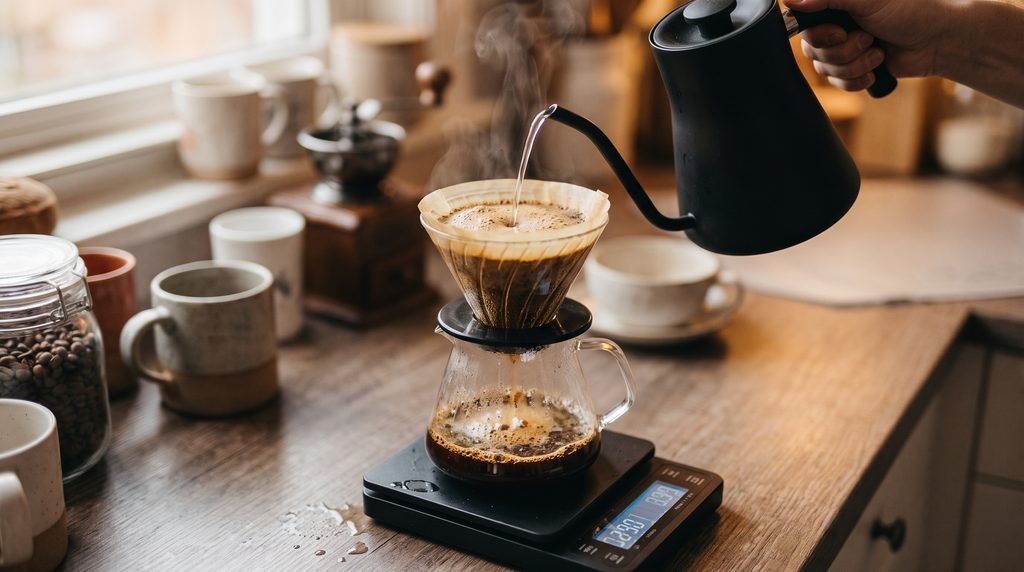
Water temperature dictates how fast flavor compounds dissolve out of the coffee grounds. Water that is too cool fails to extract sugars and oils; water at a rolling boil can scorch delicate aromatics and pull out bitter tannins.
- Target temperature: Brew between 195°F and 205°F (90°C–96°C). If you do not have a temperature-controlled kettle, bring water to a boil, take it off the heat, and wait 30 to 45 seconds before pouring.
- Use lighter roasts hotter: Dense, light-roasted beans require higher temperatures (202°F–205°F) to extract fully, while darker, more porous roasts perform better slightly cooler (195°F–198°F).
Troubleshooting Your Brew by Taste
Even with great fundamentals, every coffee bean behaves slightly differently. Adjust one variable at a time using your taste buds as a guide:
- If your coffee tastes sour, sharp, or salty (Under-Extracted): Grind slightly finer, increase water temperature, or extend brew contact time.
- If your coffee tastes bitter, dry, or astringent (Over-Extracted): Grind slightly coarser, lower water temperature, or shorten brew time.
- If your coffee tastes weak or watery: Increase your coffee dose (e.g., shift from a 1:17 ratio to 1:15) rather than grinding finer.
Frequently Asked Questions (FAQ)
What is the single best piece of equipment to improve home coffee? A conical or flat burr grinder makes the biggest immediate difference in flavor clarity and sweetness, followed closely by a basic digital gram scale.
How long does brewed coffee stay fresh? Coffee tastes best within 20 to 30 minutes of brewing. Leaving coffee on a glass hot plate burns the oils and turns the brew bitter; pour brewed coffee into a preheated thermal carafe instead.
Can I make café-quality coffee with a standard automatic drip machine? Yes. Choose a drip brewer certified by the Specialty Coffee Association (SCA)—which guarantees proper water heating between 195°F and 205°F—and pair it with freshly ground whole beans and a 1:16 weight ratio.